Uganda Embassy, IACO Push African Coffee Value Addition Under New AU Framework
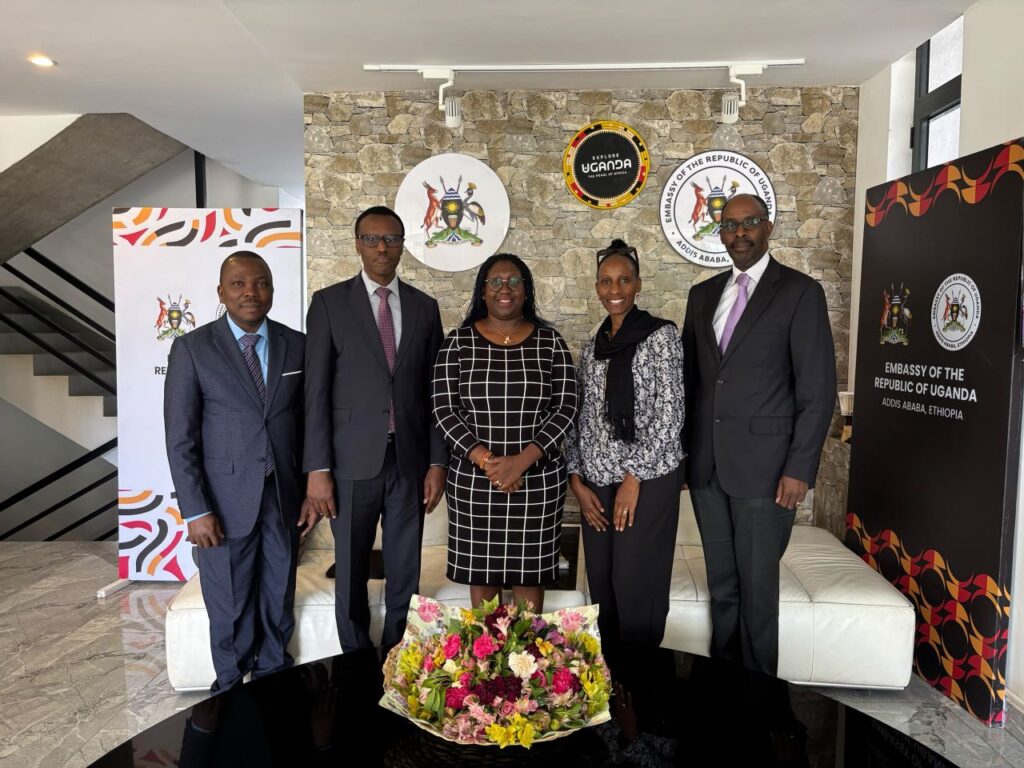
Uganda has reaffirmed its commitment to transforming Africa’s coffee sector through value addition, regional trade and stronger continental cooperation following talks between the Uganda Embassy in Addis Ababa and the Inter-African Coffee Organisation (IACO).
The discussions took place on October 28, 2026, when Uganda’s Chargé d’Affaires a.i., Mrs Margaret Kafeero, received IACO Secretary-General Ambassador Solomon Rutega for a courtesy meeting in Addis Ababa, Ethiopia.
The meeting focused on IACO’s new office at the African Union (AU) headquarters and efforts to implement a continental framework aimed at increasing Africa’s economic returns from coffee.
AU Elevates Coffee to Strategic Commodity
Ambassador Rutega briefed Mrs Kafeero on developments following the 37th AU Summit in Addis Ababa, where the African Union adopted coffee as a strategic commodity, according to the statement.
The policy direction supports the Kampala Declaration, which was drafted by the G25 African coffee-producing nations.
Rutega said the initiative seeks to address the imbalance between the value generated by the global coffee industry and the revenue African producers receive.
He noted that the global coffee sector generates more than $465 billion annually, while African producing countries receive less than $3 billion.
“We are entering an era of aggressive restructuring to fundamentally alter global trade dynamics,” Rutega said.
He added that IACO’s new office at the AU headquarters would coordinate efforts to implement the continental strategy.
Africa Targets Higher Returns Through Processing
Rutega identified local processing, roasting and packaging as central priorities for Africa’s coffee transformation agenda.
He said African countries must move away from exporting mainly raw green coffee beans and invest more in processing them into finished products.
According to Rutega, processing coffee locally can increase its value from approximately $2 per kilogram of raw beans to about $40 per kilogram of finished product.
He said the shift could improve farmers’ earnings and support more than 10 million households across the continent.
The strategy seeks to retain more economic value within Africa by expanding processing capacity, strengthening domestic industries and creating opportunities across the coffee value chain.
Uganda, Ethiopia Key to Continental Strategy
Mrs Kafeero welcomed IACO’s new Addis Ababa office and reaffirmed Uganda’s commitment to advancing the initiative.
She said the office would support regional trade ambitions under the African Continental Free Trade Area (AfCFTA).
“By leveraging an integrated 1.5 billion consumer market, we can successfully bypass traditional global supply chains that have historically disproportionately rewarded international brokers,” Kafeero said.
She also highlighted the complementary roles of Uganda and Ethiopia in Africa’s coffee industry.
According to figures presented during the meeting, Ethiopia accounts for approximately 39 per cent of Africa’s coffee production, while Uganda contributes about 23 per cent.
Ethiopia is widely recognised as the birthplace of Arabica coffee, while Uganda is a leading African coffee exporter with a strong Robusta production base.
Their cooperation could help advance regional trade, value addition and the development of stronger African coffee markets.
Agenda 2063 and Farmers’ Earnings
The meeting concluded with both parties pledging continued cooperation to advance the African Union’s Agenda 2063 and improve economic returns for coffee farmers.
The discussions also underscored the importance of strengthening Africa’s position in the global coffee industry through local processing, expanded markets and coordinated continental policies.
The Uganda Embassy in Addis Ababa expressed support for IACO’s mission and the establishment of its AU-based office.
The initiative aims to help African coffee-producing countries capture a greater share of the value generated by their products while building a more competitive and sustainable continental coffee industry.